
Design Software is Best suited for Designing Microwave Circuit Board
The PCB design process is undergoing significant change. Engineers are facing tighter specifications, more challenging materials, and new materials that offer more performance in a smaller footprint. They must also reduce time-to-market while staying on budget and reducing risk. These demands have placed enormous pressure on RF/microwave centric design and EM simulation software products to deliver more capacity, flexibility and accuracy than ever before.
A high-quality PCB design tool needs to incorporate a complete set of tools for RF circuits design, component placement, routing, and power and signal integrity analysis. This includes an integrated EM simulator, an integrated field solver, and a comprehensive circuit layout tool.
Using an integrated design platform, designers can eliminate the need to use separate programs for schematic creation, board layout, and microwave circuit board manufacturing. With a world-class PCB layout program, designers can quickly and easily create an electronic design, and then move directly to the physical layout stage. This allows them to keep their designs as close as possible to the finished product.
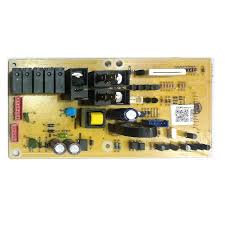
What Design Software is Best suited for Designing Microwave Circuit Board?
The best RF layout software integrates the full scope of RF circuits design and EM simulation tools into one single application. This helps to increase productivity by allowing engineers to do more with less. Having an RF/microwave design platform that supports the entire design flow from schematic creation to physical RF circuit board layout can help to avoid costly mistakes, and ensure that all of the critical signals and circuits will be routed to the correct locations on the PCB.
One of the most advanced RF/microwave PCB design systems is Agilent Genesys from Agilent Technologies. This powerful, flexible and easy-to-use design platform combines X-parameters (nonlinear S-parameters) with EM simulation and layout. It also has a 3D viewer that lets an operator rotate, zoom and vertically stretch circuit geometries to verify that the layout meets the design requirements. It also includes support for the Sonnet suites of EM simulation software tools.
Another good option for RF circuits design is Microwave Office from Mentor Graphics. This scalable system offers a variety of layout and simulation modules that work together to simplify the entire design process. It features a template-based post-processing system that automates the use of simulation results to calculate additional user-relevant data, and links to specialist products, such as Optenni Lab for circuit matching, and EMIT for co-site interference analysis.
Lastly, Pantheon software from Intercept Technology provides circuit design and layout for RF, digital, and mixed-signal PCBs. This PCB design software is fortified with full DRC capabilities, interactive routing, and advanced area-fill options. It is also supported by a full circuit-element database and an EM simulator, and it includes a full library of 3D parametric cells that provide quick and efficient component modeling.
The bottom line is that there are many design software solutions available, but the most important thing for RF/microwave circuits design is to choose one that will allow engineers to hit performance specifications while meeting budget and time-to-market constraints. The right choice will give them the tools they need to remain competitive and continue to push boundaries in the high-frequency space.