
Flexible PCB Manufacturing Companies Manage Material Sourcing
Flexible printed circuit boards (Flex PCBs) make sleek, lightweight gadgets possible, and they’re essential in a wide range of industries. But the manufacturing process is complex, involving raw material sourcing and design considerations, fabrication techniques, quality control measures, distribution logistics, and more. Read on to learn how flex PCB manufacturing companies manage these challenges.
The first step in the flex pcb manufacturing process involves a computer-aided design (CAD) system to create the layout and placement of components. This step is also used to determine the proper materials for the circuit board. Most flex PCBs are made of polyimide or polyester films, which are thin and flexible. Conductive materials such as copper are used to create electrical pathways on the board.
Once the design is complete, it’s time to move on to the fabrication stage. For this, the CAD data is uploaded to a Gerber file, which is then transferred to a CNC machine that cuts the layers of the base material into different shapes and sizes. The conductive materials are then applied to the surface of the layer. The photoresist material, which has the circuit pattern printed on it, is then aligned to the substrate and exposed to UV light. The pattern is then etched into the substrate, which creates the circuit pathways on the flex PCB.
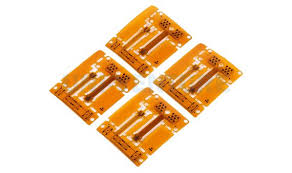
How Flexible PCB Manufacturing Companies Manage Material Sourcing
When the etching is complete, the layers are assembled to each other with solder paste. The components are then placed on the flex PCB and reflow soldered, which is a process of preheating and melting the solder so it can adhere to the components. After the reflow soldering, the flex PCB is inspected for any errors and then sent to packaging and warehousing.
Flex PCB manufacturing is a sophisticated process that produces flexible printed circuit boards (PCBs), an essential component in the rapidly evolving world of modern electronics. Unlike rigid PCBs, flex PCBs are constructed on flexible substrates, enabling them to bend, twist, and fold to accommodate complex shapes and compact designs. This adaptability makes them ideal for applications in industries such as consumer electronics, automotive, healthcare, aerospace, and telecommunications.
One of the most important aspects of a successful flex PCB is the correct distribution logistics. The supply chain for these boards must account for the unique physical properties of the product, including its sensitivity to temperature and humidity, as well as the need to protect the substrate from warping. Advanced automation, along with smart distribution logistics technologies, are transforming how the industry handles these challenges.
These tools are helping to optimize production flows, reduce waste, and minimize downtime by reducing the number of manual steps. For example, advanced robotics and machine vision systems are improving productivity by automating tasks such as layer alignment and via formation. This is driving greater consistency and enabling manufacturers to better utilize data analytics and predictive maintenance. The result is a more efficient, streamlined supply chain that supports the growth of the Flex PCB market.