Flex Circuit Boards Perform in Extreme Environments
The conductive copper traces on a flex circuit board have a higher surface-to-volume ratio, and the electrical dielectric layer is thinner, so they can dissipate heat more efficiently. In addition, flex circuits are lighter than rigid PCBs because they don’t contain as much material. This makes them an excellent choice for high-performance, lightweight electronics that are exposed to harsh environments.
The majority of flex PCBs use polyimide (PI) as the base material. Unlike fiberglass or metal, PI is a flexible polymer that does not become stiff when heated. This allows for a more flexible design, even after the flex PCB is thermoset. The PI film also has a better resistance to moisture and tears than rigid materials. For a flex circuit that will be exposed to severe environmental conditions, the design engineer needs to take several factors into consideration. For example, they need to make sure the plated through holes (PTH) are farther away from the bend region than normal to prevent them from becoming damaged by the stress of bending. They also need to ensure the transition between rigid and flex sections is smooth, and the connectors are placed properly to reduce mechanical stresses that can cause reliability problems.
flex circuit boards are used in a wide range of applications that require a combination of flexibility and space efficiency. They are especially useful in industries like aerospace and military equipment, where the components are exposed to extreme temperatures, vibrations and shocks. They are also widely used in consumer electronics, automotive and medical equipment.
How Do Flex Circuit Boards Perform in Extreme Environments?
A flex circuit can eliminate many point-to-point wire connections, which can help increase the reliability of the circuit and reduce assembly time. In addition, it can withstand harsh environmental conditions that would destroy a traditional wiring system. The flex PCB’s ductility can absorb vibration, shock and drops, making it ideal for use in vehicles that are frequently driven on rough roads. In addition, it can improve vehicle safety by reducing the number of wires that must pass through the trunk.
Flex PCBs can also improve performance in RF devices by reducing signal loss, maintaining impedance and controlling electromagnetic interference (EMI). They are ideal for connecting sensors to control units in cars with Advanced Driver Assistance Systems (ADAS) because of their compact design and ability to handle the harshest environmental conditions.
Rigid flex PCBs require specialized fabrication techniques and are better suited for medium- to high-volume production. This makes them an excellent option for aerospace and defense, automotive, and industrial machinery. In addition, they can be used in a variety of medical applications such as patient monitoring devices and diagnostic equipment.
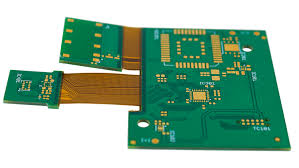
Flex circuit boards, also known as flexible printed circuits (FPCs), are a type of PCB (printed circuit board) designed to be flexible rather than rigid. Unlike traditional rigid PCBs made from materials like fiberglass and epoxy, flex circuits are made from flexible substrates such as polyimide, polyester, or even paper. These substrates allow the circuit boards to bend, twist, and fold without compromising the integrity of the electrical connections.