
printed circuit board
Printed circuit board (PCB) assembly manufacturers play a crucial role in meeting the stringent requirements of military applications, where reliability, durability, and performance are paramount. Military electronic systems must operate in harsh environments, including extreme temperatures, humidity, vibration, shock, and electromagnetic interference (EMI). PCB assembly manufacturers must adhere to rigorous standards and specifications to ensure that electronic components can withstand these challenging conditions and perform reliably in mission-critical situations.
One of the key considerations for using printed circuit board assembly manufacturer in military applications is the selection of materials that can withstand harsh environmental conditions. Military-grade PCBs often use high-quality materials such as FR-4 (flame retardant-4) epoxy laminate, polyimide, and ceramic substrates, which offer superior thermal stability, mechanical strength, and resistance to moisture, chemicals, and corrosion. These materials undergo rigorous testing and qualification to ensure compliance with military standards and specifications, such as MIL-PRF-31032 and MIL-PRF-55110.
Furthermore, PCB assembly manufacturers must adhere to strict design guidelines to meet the demanding requirements of military applications. Design considerations such as component placement, trace routing, and grounding play a critical role in minimizing EMI, maximizing signal integrity, and ensuring the reliability of the electronic system. Advanced design tools and simulation techniques are used to optimize PCB layouts and mitigate potential issues such as crosstalk, impedance mismatch, and electromagnetic interference.
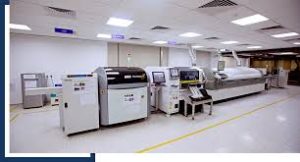
Can printed circuit board assembly manufacturer be used in military applications?
Manufacturing processes for military-grade PCB assemblies must also meet stringent quality control standards to ensure reliability and consistency. PCB manufacturers employ advanced techniques such as automated assembly, solder paste inspection, and X-ray inspection to detect and rectify any defects or inconsistencies during fabrication and assembly. Additionally, military-grade PCB assemblies undergo extensive testing and qualification, including environmental testing (e.g., temperature cycling, humidity testing, vibration testing), electrical testing (e.g., continuity testing, insulation resistance testing), and functional testing to verify performance and reliability.
PCB assembly manufacturers must also comply with strict security and confidentiality requirements when producing electronic components for military applications. Military systems often contain sensitive information and proprietary technology that must be protected from unauthorized access or disclosure. Manufacturers implement robust cybersecurity measures, access controls, and data protection protocols to safeguard intellectual property and ensure the integrity and security of military-grade PCB assemblies.
Moreover, PCB assembly manufacturers must demonstrate a commitment to continuous improvement and innovation to meet the evolving needs of military applications. As technology advances and threats evolve, military electronic systems require increasingly sophisticated and reliable components. Manufacturers invest in research and development to develop new materials, manufacturing techniques, and testing methodologies that enhance the performance, reliability, and functionality of PCB assemblies for military applications.
In conclusion, PCB assembly manufacturers play a critical role in providing electronic components for military applications, where reliability, durability, and performance are paramount. By adhering to stringent standards and specifications, employing advanced materials and manufacturing processes, and prioritizing security and confidentiality, manufacturers can meet the demanding requirements of military-grade PCB assemblies. As technology continues to advance, PCB assembly manufacturers will continue to innovate and develop solutions that enable military systems to operate effectively in the most challenging environments and conditions.